In this new feature we will travel virtually around Japan (and abroad) to get to know where our favorite wrestlers are from. Since the impetus for this series of articles was a Twitter conversation with Jason Harris about his favorite wrestler (Harumafuji) and his local fave (Okinoumi), let’s begin with his home Shimane Prefecture (島根県). [As is my wont, I was going to make a snarky, self-deprecating joke about how I wouldn’t even be able to point to Shimane on a map — but instead decided to learn where it is.]
Geography (地理学)
The prefecture is located in Western Japan along the Sea of Japan, opposite Hiroshima-ken which lies on the other side of the Chugoku mountains, along the Inland Sea, and in between Yamaguchi at the Western tip of Honshu and Tottori. Yamaguchi, Shimane, and Tottori form the San’in Region of Japan. Tottori is the least populous prefecture in Japan while Shimane is the second-least. Since Shimane is quite a bit bigger, however, it is very sparsely populated next to my beloved Kochi toward the bottom of the population density league table…above only Hokkaido, Iwate, and Akita. However, because of the mountains, there is not much agricultural production from Shimane.
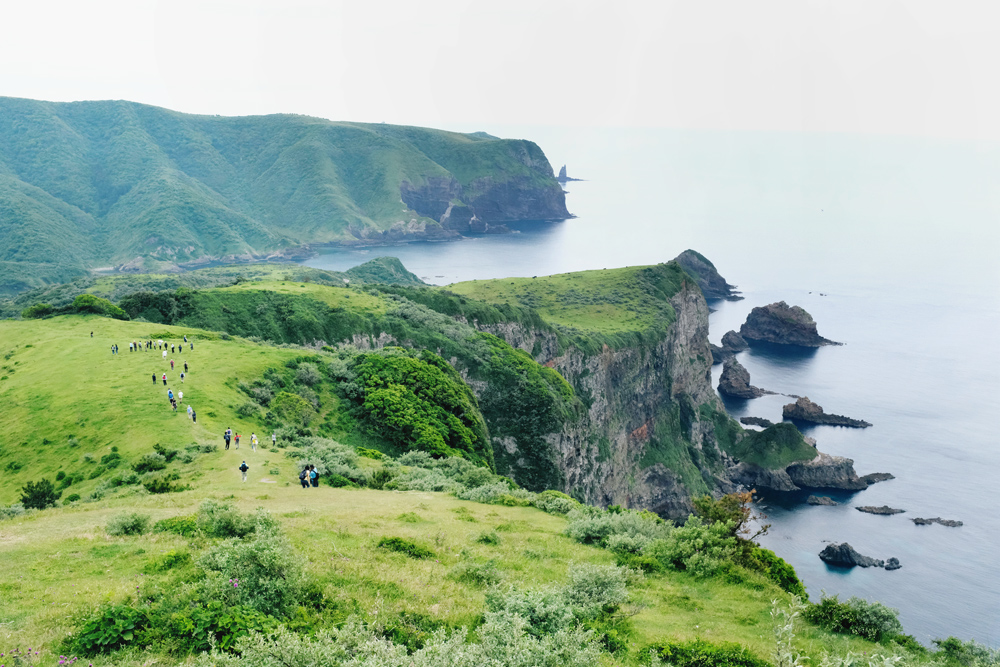
The Oki Islands, or Okishoto (隠岐諸島), are a cluster of Islands off the coast which are home to several current and former rikishi. The islands are due north from the northern end of the prefecture. The Sea of Japan is famous for its fishing and natural resources…and thus occasional disputes between Japan, North and South Korea. The islands themselves have amazing views and coastlines. There’s a great blog post about the Kuniga Coast Walking Trail.
Off the beaten path, literally in the nearby Sea of Japan, is the Oki islands, home to sumo wrestler Okinoumi, and worth a visit if you have a day to spare. It’s a 2-hour ferry ride from the port near a Matsue city to get to the islands, but well worth the trip. The nature and views and wild roaming horses are magnificent and the local people are super friendly and so grateful to tourists that visit their islands. They have bull fighting and scuba diving and hiking and lots of good seafood.
– Jason Harris
Sites
In Japan, and across the world, we’re basically stuck in our living rooms, traveling vicariously by watching travel shows or online. I’m not doing this series to be cruel, I’m doing this to hopefully point out many sumo-related sites to visit when these restrictions are finally lifted. Believe me, when these restrictions are lifted, these “off-the-beaten-path” places will be STARVING FOR SOME LOVE.
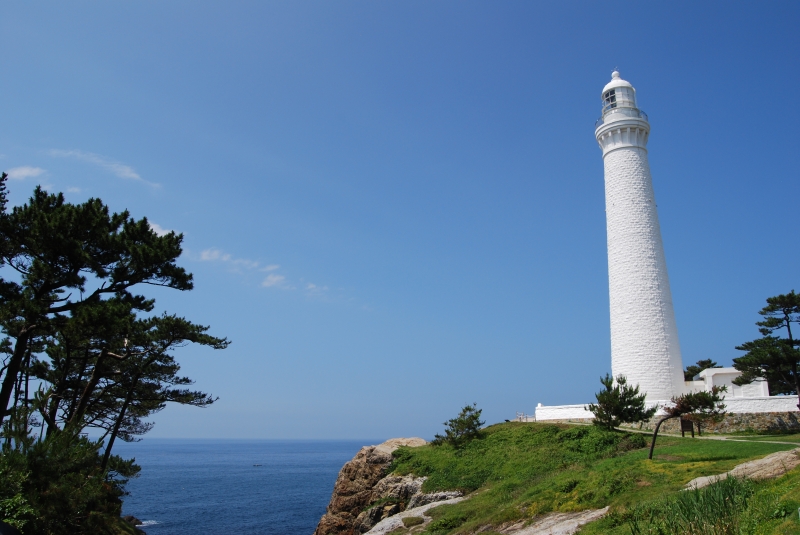
Coming back inland from the Oki Islands which I mentioned up in the Geography section, we get to Jason’s top pick, the Izumo Taisha Shrine (出雲大社). The famous shrine itself has a sumo connection as it hosts wanpaku sumo events (kids’ sumo). According to Japan’s Tourism Bureau, Izumo soba is a famous variety of fresh soba noodle that is served in round lacquer-ware instead of square because in the early 20th Century, the police department banned the rectangles as the corners were too difficult to clean. The shrine and temples of Izumo Taisha are close by Jason’s second pick, the Hinomisaki Lighthouse (日御碕灯台).
Also in the Northeast, near the capital of Matsue is the Adachi Museum of Art which has several gardens along with its collection and current art exhibitions. Another really cool feature of the art museum, and keeping with the theme of virtual tourism, is this Live webcam. You can enjoy the garden from your living room…or desk…or phone while sitting in your own garden.
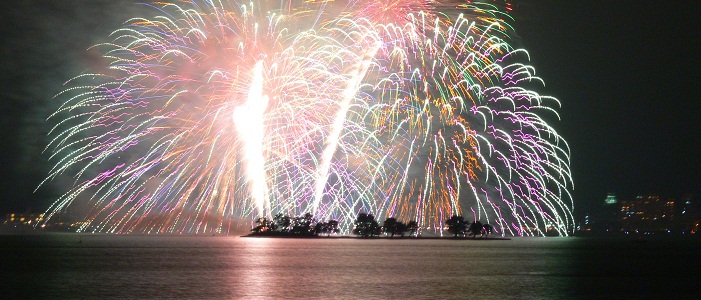
Matsue itself has some amazing scenery. The video at the top of the post of the sunset from Matsue features Nakaumi — a big lake which forms part of the border between Shimane and Matsue. Shijiko (宍道湖) is another large lake to the West of the city. In August, the city hosts a fireworks or hanabi celebration.
In Western Shimane, there are also several cultural events of interest. Tsuwano is at the far southwestern end near Yamaguchi. Jason points out the Horseback Archery which occurs on the second Sunday of April each year. Then in late July, Tsuwano has its Sagimai (heron dancing) Ritual.
Central Shimane is home to the Iwame Ginzan silver mine, a UNESCO World Heritage Site. The video above describes why the site is important but in summary, the site was one of the largest and most advanced silver mines in the 1500s. It’s particularly known for using the “cupellation method” where silver is smelted with lead. The lead is then absorbed into the ash leaving high quality silver.
Wrestlers (力士)
Hakkaku-beya seems to have recruited heavily from the Oki Island (隠岐郡) district of Shimane. Until last year, six wrestlers from Shimane-ken called Hakkaku-beya home and all of them were from the Oki Islands. The retirements of Amanishiki (not Aminishiki) and Okinoiwa in 2019 have left four Shimane wrestlers active at the heya, the most senior being Okinoumi. All of their shikona incorporate elements from their hometown.
The largest of the Oki Islands is called Dogo, and is the home of Okinoumi (隠岐の海), Okinofuji (隠岐の富士), and Okinohama (隠岐の浜). Okinoiwa (隠岐の岩) comes from the small island of Nishinoshima. Current Makushita 40 Amanoshima (海士の島) and ex-Amanishiki (海士錦) come from the island of — you guessed it! — Ama (海士).
If I ever post a pop quiz about this kanji (隠岐) you’ll get it, right? Yes. That’s what I thought. If you’re still confused, though, about how on Earth 海士 yields Ama…you’re forgiven. Ama will always be written 安馬 in my book.
Okinoumi may be the most senior of the Oki Island rikishi but Amanoshima posted an excellent 6-1 record during March’s Silent Basho so he should leap up to a career high around Makushita 14-15. That puts him within sight of Sekitori status! More good news from Okinohama who may be close to Makushita promotion. He and Okinofuji posted excellent 5-2 records. Okinoumi’s 8-7 meant all the Oki Island boys had a kachi-koshi in Osaka — too bad there were no Senshuraku parties, eh? I wonder if that clique performs better when they all are doing well. Let’s keep the momentum going!
Naruto-beya has been picking up where Hakkaku-beya left off, recruiting from Shimane-ken. However, Naruto oyakata appears to be sticking to the mainland, specifically the northern area around the capital, instead of casting his eyes to Oki. He picked up a couple of teenagers last year who both had their maezumo debuts at Natsu 2019, Mishima (then 18) and Yamane (15!). Both wrestlers are still fighting under their family names and have yet to pick up a shikona. Will more Shimane talent follow?