Time To Bring Back Kōshō Seido?

Ura-Injured

Please note, the post below is opinion and commentary, rather than factual. I am an American living in America, and a sumo fan. I have no means to change or influence the sumo association in any way.

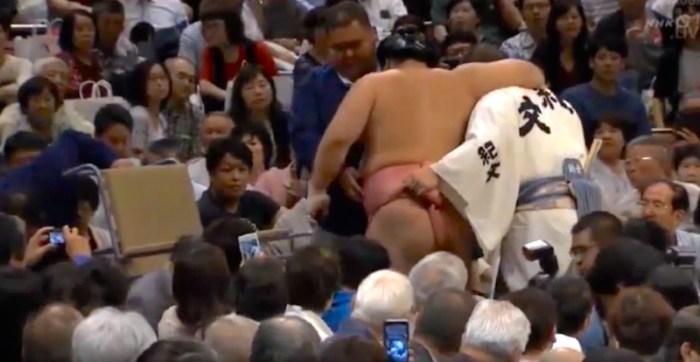
It was clear before the start of Aki that professional sumo had arrived at a difficult point in its long and glorious history. Many of its brand-name / kanban rikishi in various stages of injury and recovery, and many headliners were not going to appear. Then as if to punctuate the predicament, several other rikishi with strong public followings dropped out of the tournament before the first weekend. At least one of them may not recover enough from his injuries to return.

With our coverage of the Aki basho complete, the time has come to discuss, as a group of outsiders, if it’s time for sumo to bring back Kōshō Seido.

Kōshō Seido was a system that allowed rikishi to be declared injured, and gain a level of demotion protection for a single basho cycle. This granted a rikishi injured during a basho a larger period of time for medical treatment and rehabilitation, it was worried that the system was open for abuse. In the case of someone like Ura or Kisenosato, it is clear they have suffered a significant injury. The diagnosis and recommended treatment describe a multi-month cycle of surgery, physical therapy and gradual re-introduction of athletic competition. In the current sumo world, there is no time in the schedule to allow for such a process to reach its natural conclusion.

A poster boy for the utility of Kōshō would likely be Egyptian sumotori Osunaarashi. Once a fierce competitor of the Makuuchi ranks, a series of injuries that were never allowed to completely heal have rendered him unable to compete effectively as a sekitori. It is undoubtable that a recovery period would have helped him, and prevented his injuries from compounding. It raises the core question – is it in the best interest of the sport of Sumo to maintain the health and viability of its top athletes, or supplant them as they degrade with a crop of fresh faces?

Given the glaring reality of star sumotori in disrepair, Is it time for the the Sumo Association consider a return of Kōshō Seido?

Please chime in with your thoughts in the comment section.

Aki: Sekitori Rememberance

wakanoshima_rikishin

With the Aki 2017 basho now in the rearview mirror, let’s pay tribute to two rikishi and former sekitori who announced their retirement during the tournament.

Wakanoshima (former Juryo 7)

Wakanoshima (latterly of Shibatayama-beya) finished his career with a kachi-koshi in Makushita. The 32 year old took the long and winding path to achieve sekitori status, entering the banzuke as a 15 year old in 2000. He managed 7 basho at Juryo level over his career, across four separate trips to the professional ranks.

While Wakanoshima never scored a yusho at any level, he did manage to put dirt on familiar recent makuuchi names like Chiyonokuni, Chiyomaru, Ichinojo, Kagayaki, Shohozan… and he loved to face Ishiura, beating the latter five times out of six career matchups. The rikishi his career tracked most closely with was another Juryo yo-yo man in Kizenryu, and the pair split their 18 career match-ups evenly. He might be one of few men who can look back on their career and brag that the great Ozeki Takayasu never got the better of him, having bested one of sumo’s popular men in both bouts, in Takayasu’s younger days.

Wakanoshima, real name Fumiya Saita, finishes his career with 398 victories in the dohyo, and let’s remember him appropriately, with a sukuinage win over his longtime foe Kizenryu:


Rikishin (former Juryo 10)

We have often covered the battle that rikishi must endure to remain healthy, and so it is very sad to wave goodbye to the promising 21 year old and appropriately named Rikishin, who reached Juryo this year. He retires due to injury.

Another rikishi who started as a 15 year old, Rikishin’s achievement where so many others have failed in reaching the professional ranks should be commended. While his career was short, he still managed do to battle with several names with which Tachiai readers will be familiar. His greatest foe might have been Nagoya Juryo winner Daiamami, whom he bested on 3 of their 5 meetings.

Rikishin, real name Tatsuki Kubota and of Tatsunami-beya, finished his career with 158 victories. He also managed one division championship in his career, scoring a zensho yusho in the Makushita division in Nagoya three years ago. Here he is, dominating a Tachiai-favorite in Osunaarashi, marching him along the straw bales before finishing him off:


We wish both men the very best!

The Day After Aki

While Harumafuji was holding a post-yusho news conference, the Yokozuna Deliberation Committee was convening for its regular post-basho meeting.

harumafuji-fish-ouch
“Ouch, my elbow!” – his joke, not mine

The meeting is held to assess the situation of existing Yokozuna, and also discuss future prospective Yokozuna. And the hero of Aki 2017 was complimented all around, and seems to have passed his assessment with flying colors.

“While we can’t compliment him for his early losses and negative record of the first week, we can only consider his tenacity and resolve following that with the utmost respect” said Masato Kitamura, the chairman of the YDC. Other members expressed similar opinions.

Compared to the other Yokozuna, Harumafuji was in the least advantageous position, with his previous yusho having been won more than a year ago. But after his performance in Aki, despite his recent kyujo and less-than-brilliant star balance, there will be no pressure on him for any make-or-break decisions.

And indeed, he is not considering intai at the moment. In that press conference, he said that his goal now is to win his 10th yusho and achieve double-figures, and that he will practice and prepare with that goal in mind. Attaboy!

Regarding the other three Yokozuna, the YDC issued its standard message that “it hopes to see them return to active duty in perfect condition”. The jun-yusho winner, Goeido, was not brought up in the deliberations. Goeido and his stablemaster both admitted that there is no chance of this jun-yusho to be considered part of a rope-run. “Not with 11-4, especially not in a basho where three Yokozuna and two Ozeki were absent” said Sakaigawa oyakata.

goeido-after-loss
Goeido as captured by Futagoyama oyakata

Goeido himself had a casual meal with Futagoyama oyakata earlier today. He still seems shell-shocked.

Main source: Tokyo Sports