We learned the other day that Takakeisho was denied an Ozeki promotion, for now. Obviously, it’s on him to perform well in March with potential promotion for May. In truth, he’s not the only wrestler on an Ozeki run. He’s also not the only wrestler on an Ozeki run with the strength of a yusho on his résumé.
Tamawashi enters the next tournament on 22 wins of the 33 “standard”. 10 wins is likely a bubble number but it would be very difficult to deny promotion with a repeat of 13 wins, however unlikely that may seem. Add Tochinoshin’s kadoban status to the mix and the composition of the Ozeki corps could be very different by summer.
So, how many Ozeki do you think there will be in May? Guess the correct number of ozeki for the May tournament, in banzuke order, and I will select one of the correct answers and send you a T-Shirt of your choice from the Tachiai Shop. My guess is five Ozeki: O1E Goeido (+ Osaka yusho), O1W Tochinoshin, O2E Takayasu, O2W Takakeisho, O3E Tamawashi.
Number of Ozeki in May 2019:
*Bonus* Reply with the right names *in the right banzuke order* and I’ll pick one from the right answers for a T-Shirt on me from https://t.co/4DiBsyzTsH
It’s that time of the year again. It’s February, and there is no Jungyo. If you take a look at the Grand Sumo Calendar, though, you’ll see that there are always two hana-zumo events in this month: The NHK charity event, and Fuji TV’s Grand Sumo Tournament.
Hana-Zumo is exhibition sumo. The name literally means “flowor sumo”. This is because in the Heian era, events like that took place in the Imperial Palace, and there were no “East” and “West” then. So the rikishi were distinguished by flowers they wore in their hair.
NHK’s #52 Charity Sumo Event
The special feature of this event is the song contest at the end. One side of the Kokugikan is fenced off, and set up as a huge stage.
The event includes extras such as Jinku, drum demonstration, Shokkiri, and Yokozuna rope tying demonstration.
Kasugaryu putting the finishing touches on Hakuho’s rope.
There is also what the Japanese call “A talk show”, which is actually an on-stage interview with some celebrity. In this event, they interviewed the former Takekaze, now Oshiogawa oyakata.
In fact, we had several new oyakata faces in the blue NSK jackets.
Sanoyama oyakata
Oshiogawa oyakata
Araiso oyakata
Here is a short video report about this event from NHK:
The former Takekaze says: “I didn’t imagine I’ll get to age 39, nearly 40, in any shape. If someone like me can do it, than anybody can!”
This is a “regular” sumo event in that bouts are more or less by ascending banzuke order ending with the san-yaku members doing san-yaku soroi-bumi (synchronized shiko). As always, Hakuho awaits his turn to do the soroi-bumi leaning on the shoulders of a Yobidashi:
And I also have a bout for you from this event – the musubi-no-ichiban, Kakuryu vs. Hakuho (bonus bow twirling ceremony):
You may notice that Hakuho is far from being in shape for sumo. He does this bout with his right leg mostly floating up in the air. There are several rikishi who are kyujo from this event, but Hakuho is not one of them, as absenting himself from the hana-zumo event would prevent him from participating in any events – such as weddings, and the Hakuho Cup, which of course he doesn’t want to miss. So he participates on one leg.
The Fuji TV event comes the day after the NHK event. It includes sumo in elimnation format – both Juryo and Makuuchi. The special feature of this event is the veteran bouts – with oyakata putting on their shimekomi and doing sumo.
Refer to the link at the end of this post for the veteran bouts themselves.
The former Kisenosato had his debut as a commentator in this event. He readily speaks, but I think they should leave commenting to someone who speaks more clearly.
Two former yokozuna as Statler and Waldorf
Since the active rikishi bouts are arranged in elimination format, it means there are winners in this event. Much like a honbasho yusho, winning this tournament means receiving many prizes. There is a trophy:
Takayasu’s first yusho… in the Grand Sumo Tournament hana-zumo event, that is
And there is an air-conditioner:
This will come in handy in the next Nagoya basho
There are also a bale of rice, a lot of beef, a 10-day cruise around Japan. All went to Takayasu, who had to earn them by going through a very genki Yoshikaze. Take a look at Yoshikaze vs. Shohozan:
Hakuho, again, doing his sumo on one leg and getting eliminated in his first round.
The veteran bouts. The most impressive one is Kyokutenho. Robocop does a lot of pre-bout robot stuff, but Inagawa oyakata eliminates him rather easily. The most balanced bout is the one between Magaki and Kumagatani.
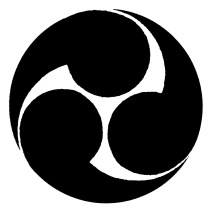
Azumaryu wins the Juryo tournament. This was done in such a way that the final was held between three wrestlers – like a three-way playoff. In Japanese you’ll heard the word “Tomoe Ketteisen”. This alludes to a mitsu-domoe:
Ryuden’s matta. And another matta.
Yoshikaze vs. Abi – continuing his genki performance.
Araiso oyakata in his role as a commentator. He is mostly asked to comment about Takayasu.
There were a couple of sumo events over the weekend. First of all, there was a 相撲トーナメント, sponsored by Fuji TV, involving many of the top wrestlers in an elimination-style tournament. The final bout featured Takayasu vs. Yoshikaze with Takayasu victorious by yorikiri (below).
Hakuho and Kakuryu were unsurprisingly eliminated in their first round bouts. Injuries are still hampering our champions and are a major concern going into March. But Yoshikaze was the surprise of the tournament, following up a disappointing Hatsubasho by channeling the kyujo Tochinoshin, and lifting Shohozan* before beating Abi in the semi-final.
I had hoped to provide a bigger update on injury status for wrestlers like Chiyonokuni, Arawashi, and Kotoyuki but one of the only tweets I could find was of Chiyonokuni in what appears to be a hospital room. Since none of them appeared in the Fuji TV tournament, let’s keep our fingers crossed that they’re taking it easy and will be ready to go in March!
*Edit: I originally said Tochiozan but I can’t read kanji well this early in the morning.
Rising star Takakeisho pressed hard during the Hatsu basho to make the case that he should be promoted to Ozeki. Among sumo fandom, a general guideline is thought to be 33 wins for consideration by the NSK for promotion. To be clear, it’s not a standard of “win 33 over 3 basho and you get promoted”; reality shows that is the minimum for consideration. [It’s not even a minimum: Kisenosato and Goeido were both famously promoted with only 32 wins, and further back in time there were promotions with even lower totals. -lksumo] On the road to his 33rd win, Takakeisho has won a yusho, a jun-yusho, and shown that he can beat Yokozuna and Ozeki. For most fans, it was almost a foregone conclusion that his bid would be approved.
But following the Hatsu basho, the NSK committee of sumo elders concluded that in spite of winning a tournament, and nearly winning a second consecutive tournament, his performance was insufficient to qualify for promotion to Ozeki at this time. They encouraged him to try harder (?) at Osaka. Part of their citation was his loss to Ozeki Goeido on day 15, where the struggling Goeido overpowered Takakeisho and quickly ejected him from the dohyo. Later we learned that in the course of this match, Takakeisho suffered a foot injury.
Takakeisho suffered an injury to the bottom of his right foot on Day 15 of Hatsu, and now has some internal bleeding / haemorrhaging in that area. Chiganoura oyakata: "I don't want to push him."#sumohttps://t.co/N0IYJE5V4d
Takakeisho, at 22 years of age, represents the next generation of rikishi who have been pressing hard to dislodge the old guard, and take their place in sumo’s top ranks. Young, strong, lacking chronic injuries that never quite healed, the rise of both the Tadpole and Freshman cohorts is part of the natural evolution of sumo that Tachiai has been forecasting for the past two years.
But it’s quite likely that western fans felt the young fellow was robbed by the curmudgeons in the NSK, who as of late have been working in increasingly mysterious ways. I was not, however, surprised that the NSK had decided to make young Takakeisho work a bit longer before he became Ozeki. It’s clear he is on an ascendant path, and with his youth, strength and quality of sumo, he will be Ozeki no matter what if he can keep from getting hurt. It is undeniable that the drama around both Sekiwake coming from recent yusho, and both working to make a valid Ozeki bid, will bring a lot of attention to the Osaka tournament, and with the Japanese Yokozuna now retired, the NSK needs compelling stories to keep the public engaged.